
Scott Uncorked: What Riesling Has Taught Me
Riesling has been a good teacher.
It doesn’t let you fake much. If something is off with the fruit, it shows up. If you get something right, it shows up, too.
I’ve learned a lot from making Riesling. Here are some of the lessons that stand out.
It Starts With the Fruit
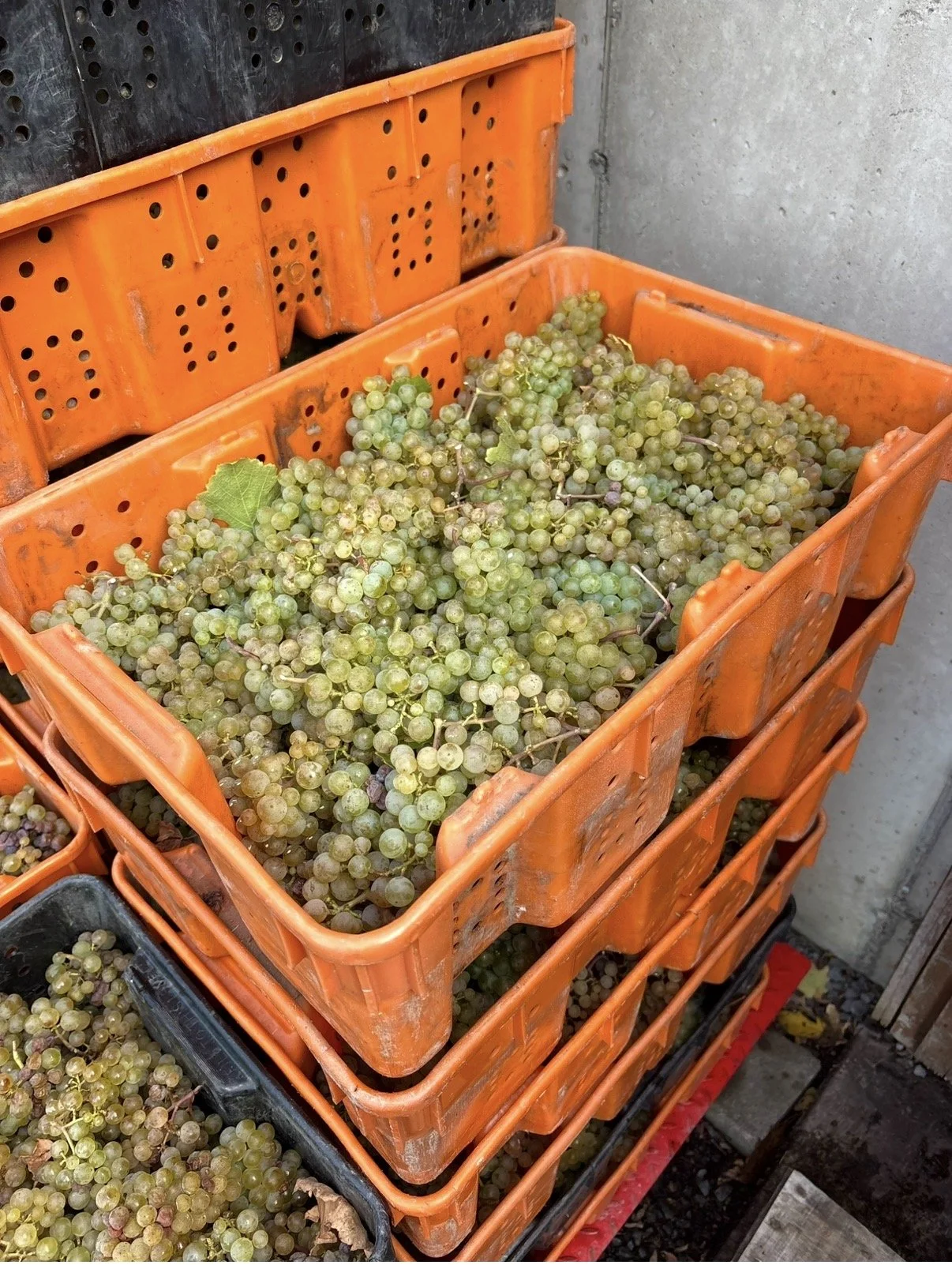
Wine can only be as good as the fruit you start with. There’s really no way around that.
Good vineyard sites produce better fruit, and that quality is worth paying for.
You can make thoughtful decisions in the cellar, but you can’t fix fruit that wasn’t there to begin with. Riesling is especially honest in that way—there’s nowhere to hide.
You Need a Plan Before You Begin
Before anything starts fermenting, you need a plan.
That means making some decisions up front:
Are you trying to make a dry, off-dry, or sweeter wine?
Are you using natural yeast, commercial yeast, or a mix?
Are you fermenting in stainless steel or neutral oak?
I prefer to make a balanced dry Riesling rather than a bone-dry one. My general rule of thumb is about one gram per liter of residual sugar for every one gram per liter of titratable acidity.
Finger Lakes Riesling often comes in around 7 g/L of titratable acidity, so I like to finish around 7 g/L of residual sugar. That works out to roughly 0.7° Brix, or about 0.7% residual sugar in the finished wine. The goal isn’t sweetness; it’s balance.
Right now, I use stainless steel for fermentation and aging. As we grow, I’d like to incorporate some neutral oak barrels, but only if they support the wine rather than change it.
Patience Matters More Than You Think
The juice is going to become wine. My job is to make sure the yeast can do its job fully, with as little pressure from me as possible.
The more the yeast is allowed to do its work on its own, the more complex the wine becomes. Too much intervention flattens things out. Riesling rewards restraint.
Riesling tends to show you where it comes from. If you give it the space, it will show you the site and the season. My goal is to let the fruit become the wine it was meant to be and let the Finger Lakes terroir shine through.
The biggest lesson for me has been learning when to act and when not to. Do the work early, trust the yeast, and don’t get in the way of what the wine is trying to become.
If you like this post, you can learn about the top lessons I learned in the vineyard here.
If you’re following along, thanks for being part of the ride—more stories (and wines) to come. If you want to stay updated on the latest posts, make sure to subscribe to our blog. And don’t forget to check out our Facebook group, Finger Lakes Food and Wine Adventure.
Cheers from the lake,
—Scott
