
A conversation about place, terroir, and the Finger Lakes
People often ask: Why bother with Finger Lakes wine?
The question usually comes with assumptions. The wines are too simple. They’re too sweet. It’s too cold to grow serious grapes here. Great wine always comes from somewhere else.
The truth is, Finger Lakes wines have changed. They’re more sophisticated and are rooted in geography, continuity, and more than a century of deliberate choices in vineyards and cellars. That long history helps explain why this region is increasingly well-positioned today.
Changing the Conversation
For many people, the Finger Lakes wine trails evoke memories of cloyingly sweet wines made from native or hybrid grapes. The good news is that things have changed for the better, and that outdated perception no longer reflects the reality of winemaking in the Finger Lakes.
Today, Finger Lakes wineries are producing memorable, site-driven vinifera wines at a very high level. And they’re doing this because of their terroir, not in spite of it.
At Navinnus 42, we’re all about that sense of connection and place. We want to help you understand the landscape, the climate, and the people in the Finger Lakes who are behind every glass of bright, complex, and world-class wine.
From Assumption to Experiment
For much of the early twentieth century, the prevailing view was simple: European vinifera grapes could not survive in the Finger Lakes because the winters were too cold and the risks were too high. Hybrids were seen as the practical solution.
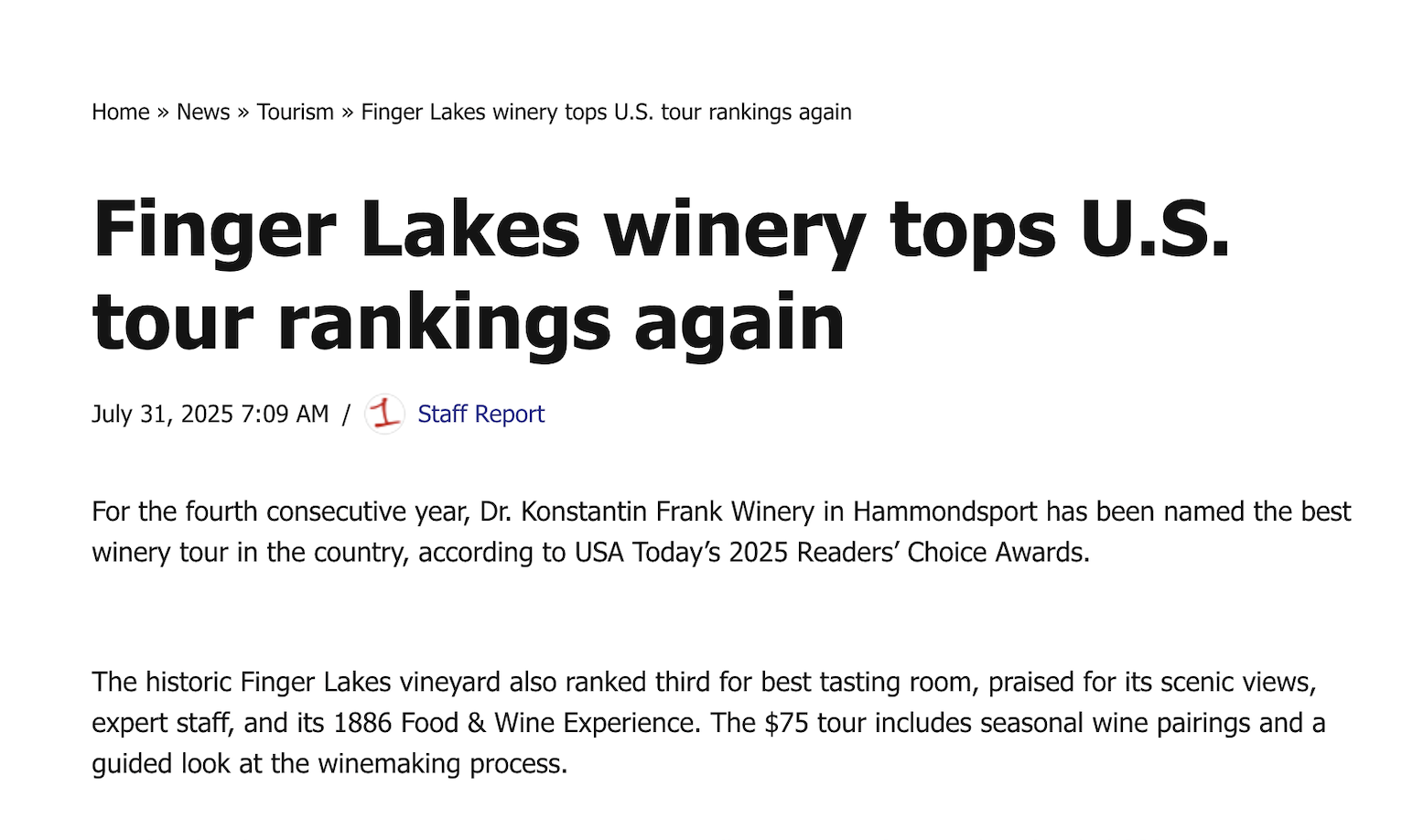
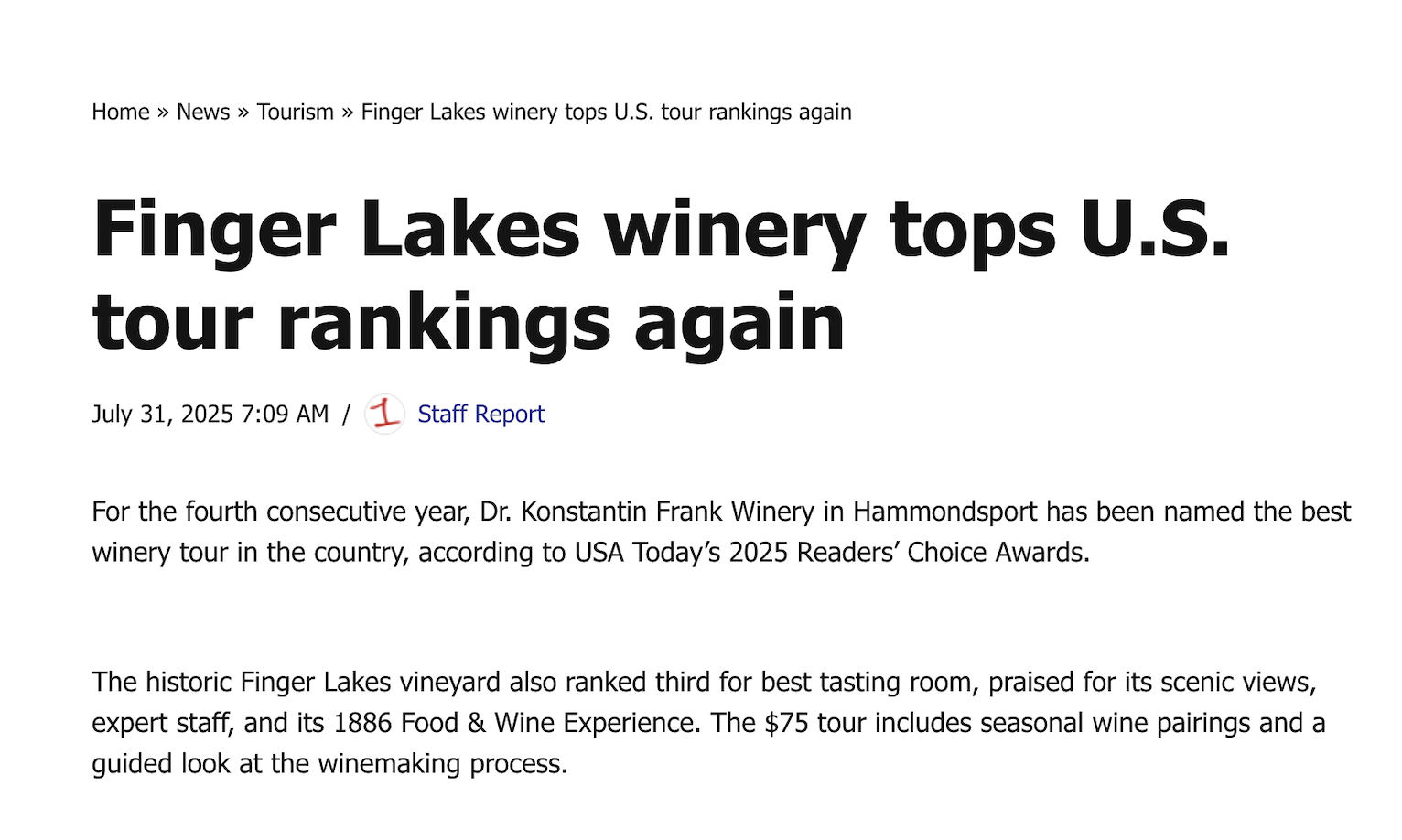
That view began to change in the middle of the century, largely due to the work of Dr. Konstantin Frank, who proved that vinifera grafted onto American rootstock could survive and produce quality wine in a cold climate when planted in appropriate sites and farmed correctly.
Winemakers like Hermann J. Wiemer built on that foundation, and through careful vineyard management, clonal selection, and attention to site expression, vinifera moved from trial to intention in the Finger Lakes.
Geography That Shapes the Wines
This is where being rooted in place comes in. History alone does not explain Finger Lakes wine. Geography, however, does.
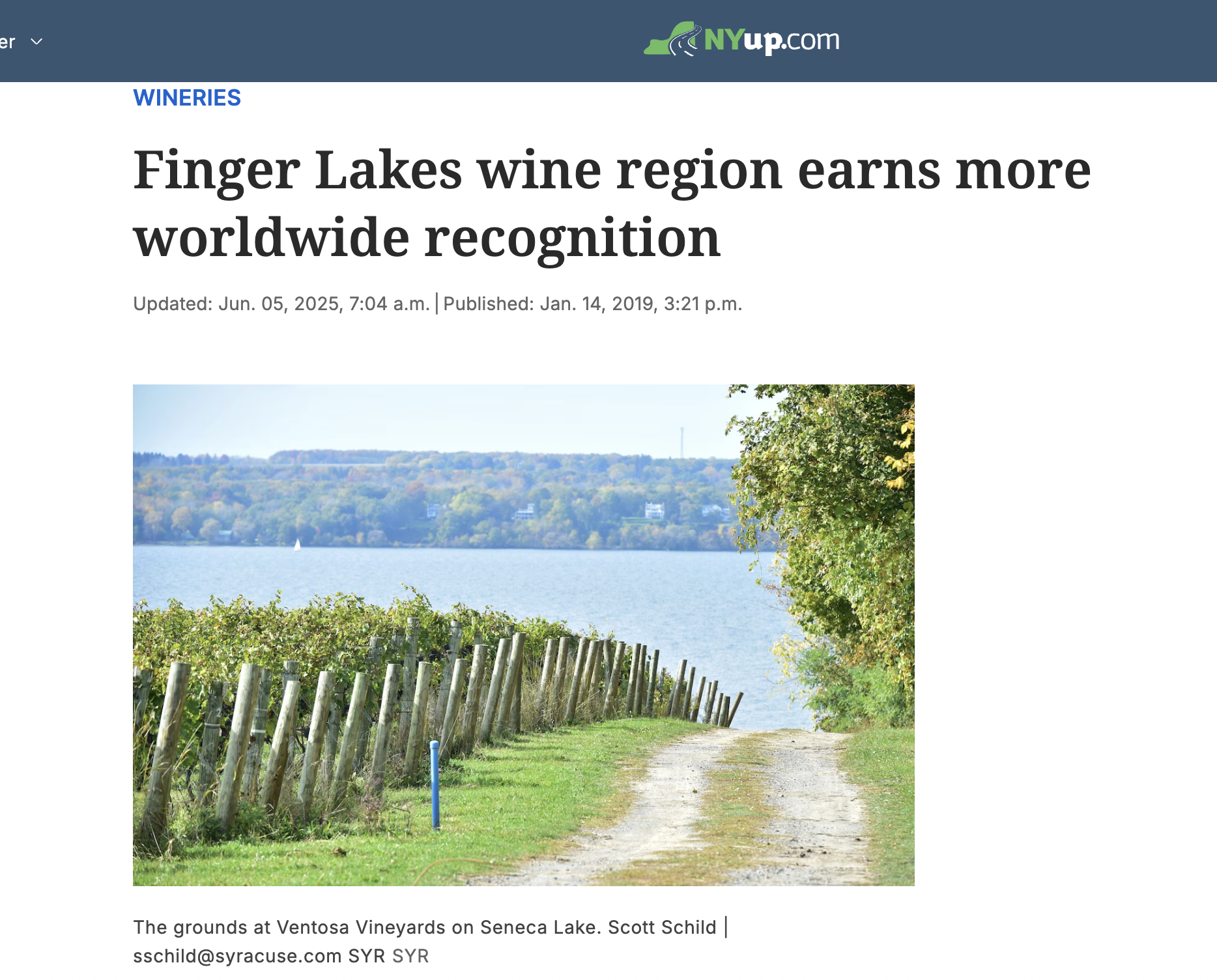
The region’s deep glacial lakes influence viticulture by moderating temperature extremes. The lakes reduce rapid temperature swings in fall and winter, slow spring warming, and lessen the frequency of severe frost events. Sloped vineyard sites allow cold air to fall away from vines instead of settling around them.
Because of the climate, grape varieties that benefit from long, slow ripening seasons do best here. Riesling is the most visible example, but it’s just one of many. Gewürztraminer, Grüner Veltliner, Cabernet Franc, Saperavi, and other varieties can grow well here, too, offering a crisp balance of flavor development and acid retention in the bottle.
Recognition in Practice
Our region produces food-friendly wines with crisp acidity, wonderful structure and complexity, and pure clarity.
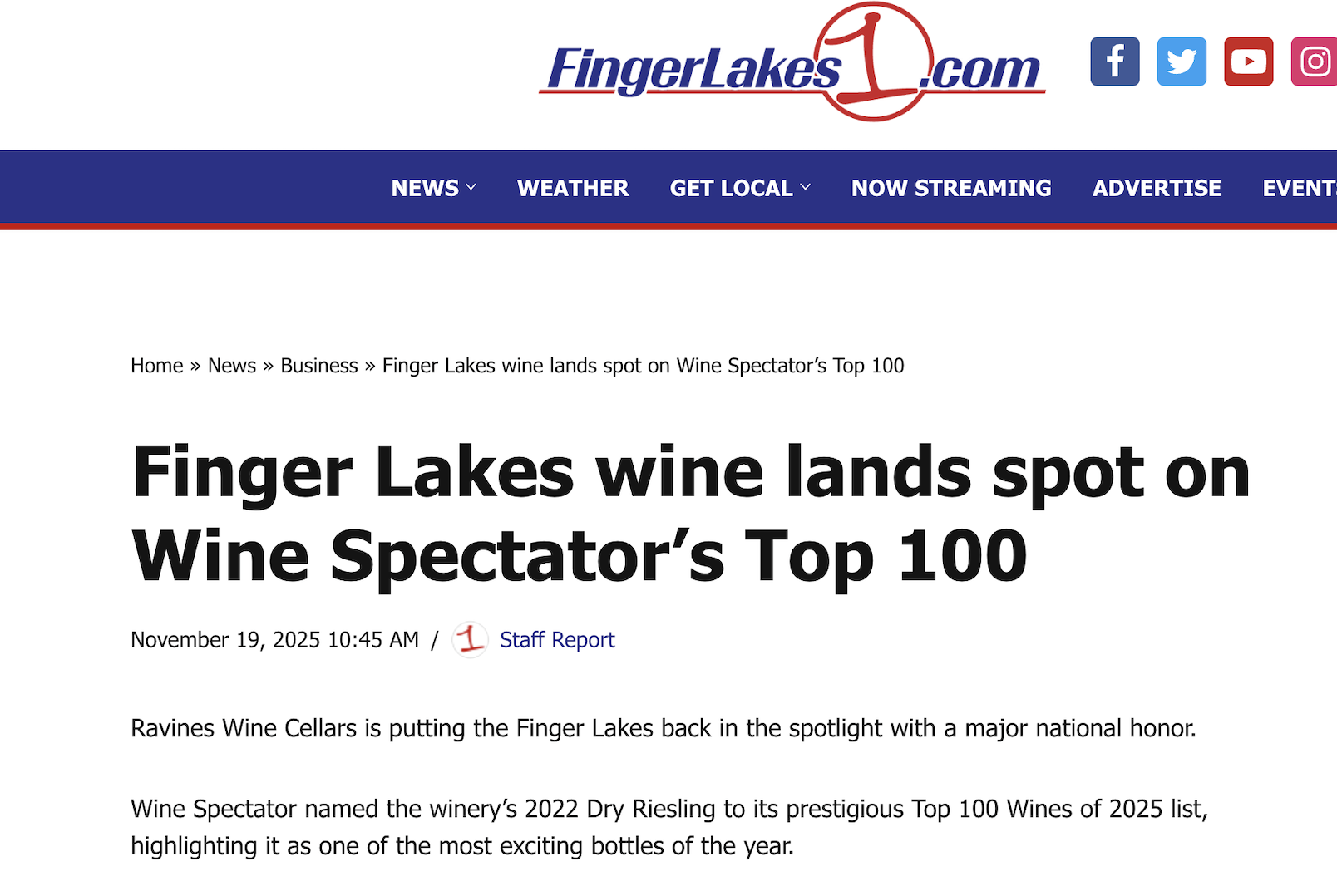
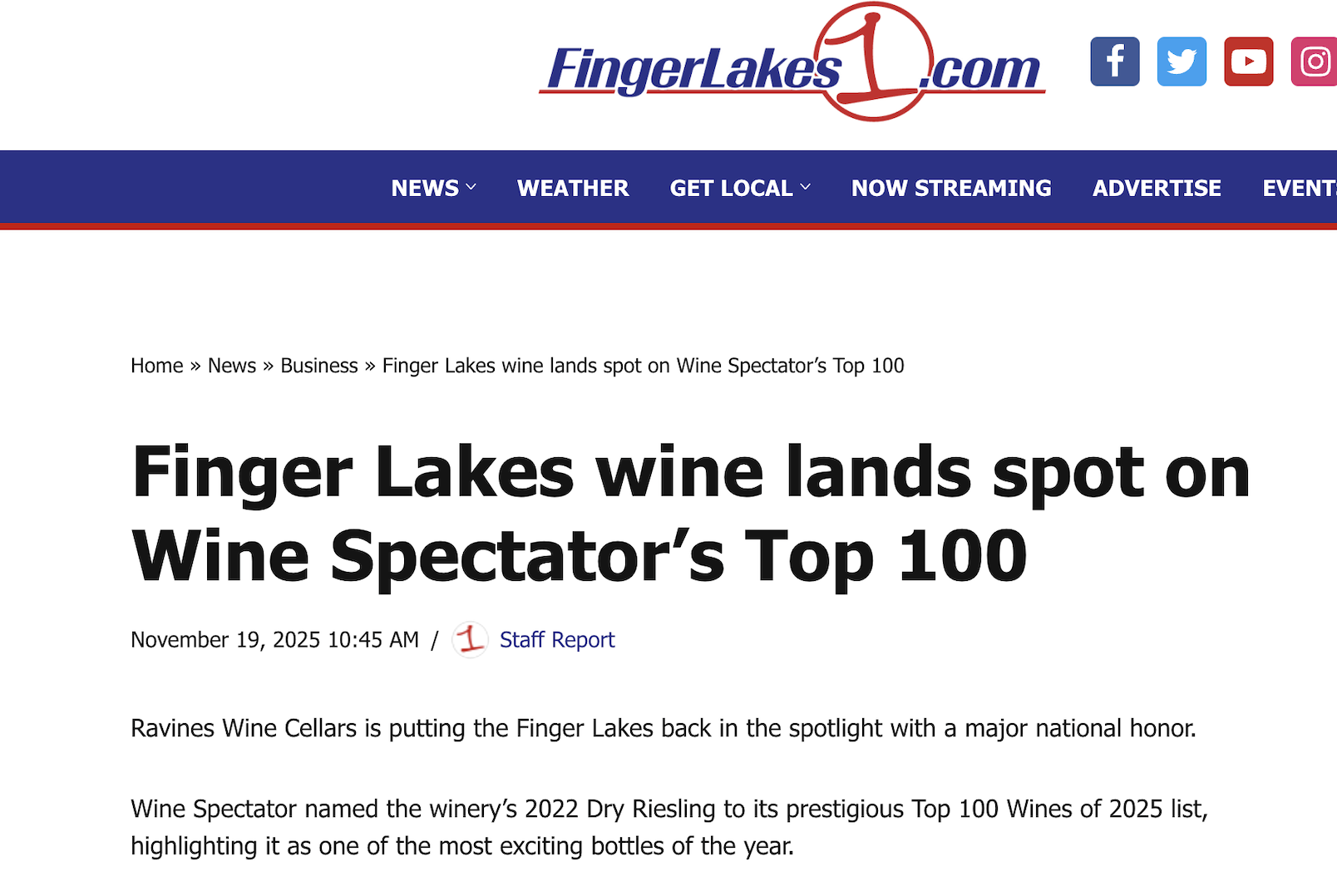
It also draws in some of the best and brightest wine professionals. While the Finger Lakes are often described as an “up-and-coming region,” in practice, it’s full of wine professionals who’ve worked and trained worldwide, and then deliberately chosen to work here.For example, Ria’s Wines (where Scott is making our wines under an AP Agreement this year) was co-founded by Ria D’Aversa and Mike Penn, who previously worked in California, New Zealand, Italy, and France before relocating to the Finger Lakes. Similarly, Trestle 31 was co-founded by Nova Cadamatre, Master of Wine, who built much of her career working with vineyard sites in California. Ravines Wine Cellars also reflects international training applied intentionally to Finger Lakes terroir, just as Hillick & Hobbs was established here in partnership with Paul Hobbs, an American winemaker who brings decades of experience from Napa and beyond to the Finger Lakes.
These are not symbolic investments or experiments. They reflect confidence in a region that supports serious, site-driven wine.
How we got here and where we’re going
The Finger Lakes wine region didn’t become what it is overnight. It’s the result of continuity in winemaking, constant adaptation, and sustained efforts to produce world-class wines.
In future blog posts, we’ll look back on how we got here, how wine production persisted during Prohibition even as it stopped elsewhere, and how growers and winemakers tested assumptions, learned from failure, and adjusted over time.
Finger Lakes wineries are producing serious vinifera wines today. That’s no accident. It’s the result of dedication, experimentation, and a long-term focus on site and place.
If you like this post, you can learn about some of the top grapes grown in the Finger Lakes here.
If you’re following along, thanks for being part of the ride—more stories (and wines) to come. If you want to stay updated on the latest posts, make sure to subscribe to our blog. And don’t forget to check out our Facebook group, Finger Lakes Food and Wine Adventure.
Cheers from the lake,
—Niki & Scott
